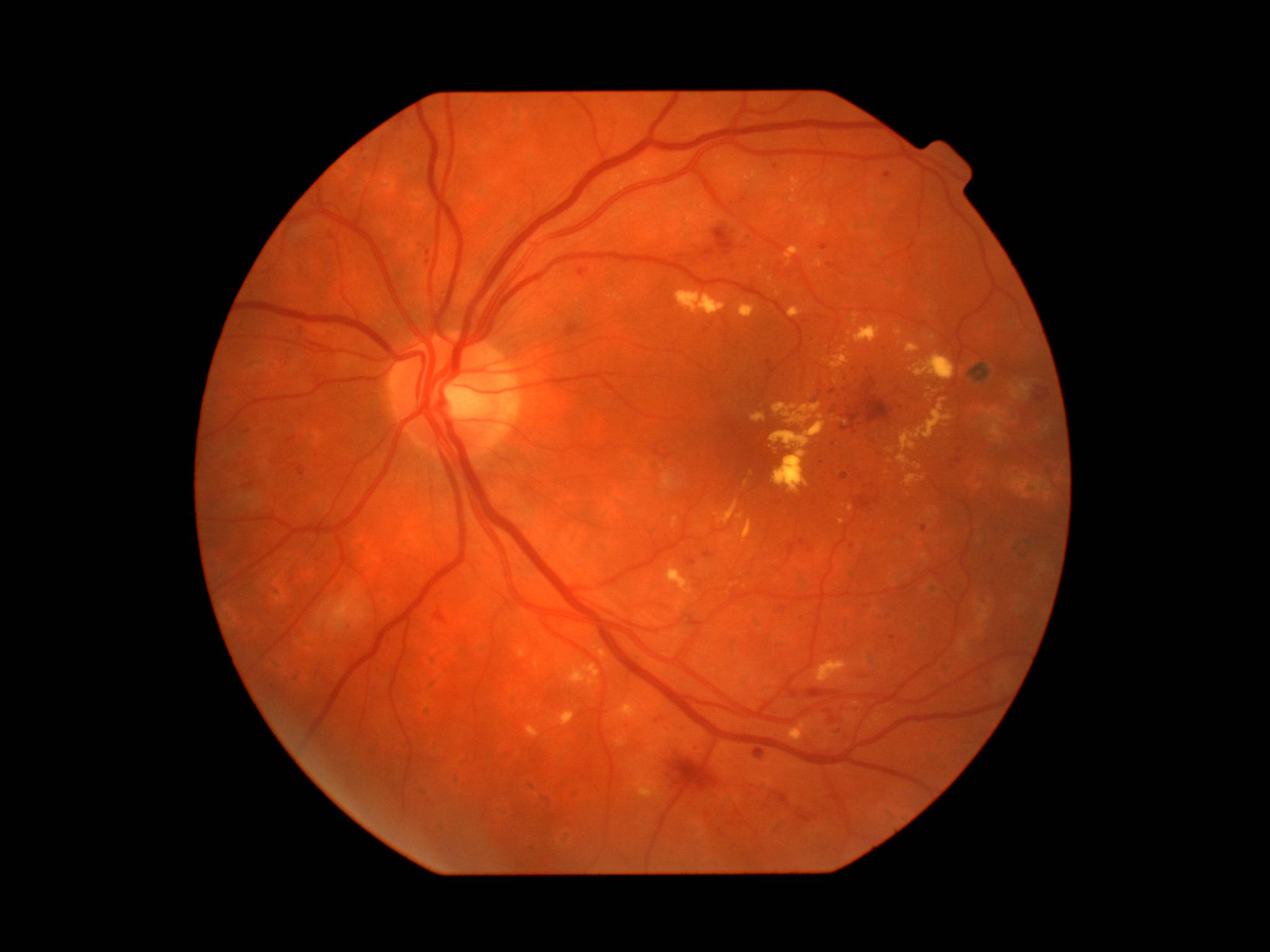
Retinal Disease Classifier
Zero-shot and linear-probe transfer of foundation models for diabetic retinopathy and glaucoma. 0.92 AUROC with 5-20% labels. Full Monash thesis included.
View projectI train, evaluate, and ship foundation-model systems. Master’s research at Monash, applied AI at Perplexity, and a live business on the side.
Zero-shot and linear-probe transfer of foundation models for diabetic retinopathy and glaucoma. 0.92 AUROC with 5-20% labels. Full Monash thesis included.
View project
End-to-end training data engine: generate, evaluate with LLM-as-judge, detect contamination, fine-tune with LoRA, run significance tests. 184 tests, +16.8% ROUGE-1.
View project
Compliance documentation service for Australian real-estate agencies facing new AUSTRAC AML/CTF obligations. 5-day customised programs.
View projectShort version. Long version is in the resume.
I’m an AI / ML engineer with a Master of Artificial Intelligence from Monash University. My research focus was foundation models for medical imaging — the Master’s thesis above compares four vision-language and self-supervised encoders against three retinal-disease benchmarks, with linear-probe transfer at 5–20% label budgets.
Currently a Fellow & Ambassador at Perplexity AI, where I prototype LLM agent workflows and dig into AI product strategy. Alongside that I ship engineering projects (Forge, an auth microservice) and run GateCrown, a small AML/CTF compliance business serving Australian real-estate agencies. I also write a serial publication of source-backed essays on the AI stack — 45 so far, roughly two a week.
Based in Melbourne. Open to AI / ML engineering and research roles at frontier labs, applied-AI teams, and well-funded startups. Also open to technical-cofounder conversations.
Download resumeSource-backed essays on what’s actually being built underneath the AI economy — chips, packaging, agents, edge inference, and a few things in between.
Source-backed maps of the AI field — foundations, papers, manufacture, application, biology, and a living field manual of every term.
Five-layer taxonomy of AI techniques. Start here: how the field decomposes into models, data, training, deployment, and applications.
Knowledge graph of the 50 landmark AI / ML papers. Trace dependencies and see how the modern stack accumulated.
How AI is physically built — power, chips, TSMC, HBM, NVIDIA, cloud, data centres. 148 nodes, 73 companies, 79 source-backed Q&As.
The library behind the atlases, the essays, and the projects.
AI · software · intelligence · startups · trust · writing — plus side maps on peptides and the scientific process. Books that compound, papers worth re-reading, and a three-pass method for reading them.
Perplexity AI
Prototyping LLM agent workflows. Working on AI product strategy. Building no-code and low-code internal tools to automate analysis.
Monash University
Ran zero-shot and linear-probe experiments with the FLAIR vision-language model for retinal disease detection. Built the full Python / PyTorch research pipeline from scratch.
Monash University
Coursework in deep learning, NLP, computer vision, and reinforcement learning. Research focus: foundation models for medical imaging.
1337 Ventures
Researched ~400 Malaysian startups; categorised by sector, stage, and traction to map the early-stage ecosystem and support deal flow.
Also: DeepLearning.AI specialisations in ML, DL, and NLP · Google Data Analytics · 2023–2024
Got a project, a question, or just want to compare notes on the AI stack? Reach out.
[email protected]Or send me a message directly